Are you a student in Kerala wondering if a Diploma in Oil & Gas Engineering is the right career choice? You’re not alone. Many freshers ask the same question: “Will I get a good job after completing this course?”
The answer is yes if you choose the right institute, gain practical skills, and earn industry-recognized certifications.
The Oil & Gas industry continues to offer excellent career opportunities in India, the Gulf (UAE, Qatar, Saudi Arabia, Oman, Kuwait), and other international markets. Companies are actively hiring skilled diploma holders for engineering, inspection, quality control, safety, and Non-Destructive Testing (NDT) roles.
Unlike many courses where graduates struggle to find the right job, a Diploma in Oil & Gas Engineering prepares you for specific industry roles that employers are already recruiting for.
Table of Contents
Why Choose Oil & Gas Engineering?
The global demand for energy is increasing every year. Oil refineries, petrochemical plants, offshore platforms, pipelines, and EPC companies require skilled professionals to operate, inspect, and maintain their facilities safely.
For Kerala students looking for high-paying careers, the Oil & Gas sector offers:
- Excellent job opportunities in India and the Gulf
- Attractive salary packages
- International career growth
- Industry-recognized certifications
- Fast career progression
- Opportunities in engineering, inspection, quality control, safety, and NDT
Top Career Opportunities After a Diploma in Oil & Gas Engineering
- Pipeline Engineer
Pipeline Engineers design, inspect, and maintain pipeline systems used for transporting crude oil, natural gas, and petroleum products. This role is essential in upstream and midstream operations.
- Refinery Operator
Refinery Operators manage refinery equipment, monitor production systems, and ensure smooth and safe plant operations. It is one of the most sought-after careers in downstream operations.
- Offshore Technician
If you enjoy challenging work environments, becoming an Offshore Technician can be a rewarding career. Offshore professionals support drilling, maintenance, and production activities on oil rigs and offshore platforms.
- Materials Engineer
Materials Engineers specialize in metallurgy and corrosion control, ensuring that pipelines, pressure vessels, and industrial equipment remain safe and reliable.
- QA/QC Inspector
Quality Assurance and Quality Control (QA/QC) Inspectors verify that materials, fabrication, and construction work meet international standards before project completion.
- Piping Inspector
Piping Inspectors inspect industrial piping systems based on API 570 and ASME standards. These professionals are in high demand across refineries, EPC companies, and petrochemical plants.
- Welding Inspector
Welding Inspectors examine weld quality, identify defects, and ensure welding work complies with international codes and safety requirements.
- Project QC Coordinator
Project QC Coordinators manage quality control activities across construction projects, coordinating inspections, documentation, and compliance.
- NDT Technician (ASNT Level II)
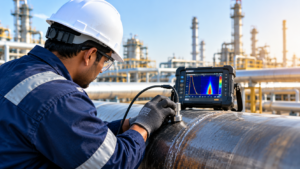
Non-Destructive Testing (NDT) Technicians inspect equipment and welds without causing damage using internationally accepted testing methods. ASNT-certified professionals enjoy strong global demand.
- RT Technician
Radiographic Testing (RT) Technicians use X-ray and Gamma-Ray techniques to detect internal defects in welds and industrial components.
- UT / PAUT Inspector
Ultrasonic Testing (UT) and Phased Array Ultrasonic Testing (PAUT) Inspectors use advanced technology to identify hidden defects inside materials. These are among the highest-paying inspection careers.
- HSE Officer
Health, Safety, and Environment (HSE) Officers ensure workplace safety, conduct audits, implement safety procedures, and maintain compliance with international regulations.
Skills Required to Get Hired
To improve your chances of getting placed, you should have:
- Practical hands-on industrial training
- Strong technical knowledge
- Good communication skills
- Industry-recognized certifications such as ASNT, API, or NEBOSH
- Resume preparation and interview skills
- Placement support from a reputed training institute
Career Opportunities in the Gulf
Many students from Kerala choose Oil & Gas Engineering because of the excellent opportunities available in:
- UAE
- Saudi Arabia
- Qatar
- Oman
- Kuwait
- Bahrain
International companies regularly recruit skilled diploma holders for refinery projects, offshore operations, pipelines, EPC construction, inspection, and quality assurance.
Final Thoughts
A Diploma in Oil & Gas Engineering is more than just a qualification—it is a pathway to a successful engineering career. Whether your goal is to work in inspection, quality control, NDT, refinery operations, offshore projects, or industrial safety, the industry offers multiple career options for skilled professionals.
With the right training, certifications, and practical experience, freshers from Kerala can build rewarding careers in India and abroad.
Frequently Asked Questions
Is a Diploma in Oil & Gas Engineering good for freshers?
Yes. It prepares freshers for entry-level technical positions in engineering, inspection, NDT, QA/QC, refinery operations, and safety management.
Which Oil & Gas job has the highest salary?
Advanced NDT roles, Piping Inspectors, Welding Inspectors, Offshore Technicians, and experienced HSE Officers generally receive higher salary packages.
Can Kerala students get Gulf jobs after completing the diploma?
Yes. Many diploma holders from Kerala work in the UAE, Saudi Arabia, Qatar, Oman, Kuwait, and Bahrain after obtaining internationally recognized certifications and completing practical training.
Which certifications are important?
Popular certifications include:
- ASNT Level II
- API 570
- API 510
- API 653
- NEBOSH
- OSHA
Is placement support important?
Absolutely. Choosing an institute with strong industry partnerships, placement assistance, and practical training significantly increases your chances of securing a job after completing your diploma.